
Viral or subacute thyroiditis
It may cause neck pain and a temporary change in hormone release. Treatment is often medical, with follow-up blood tests.
Endocrine Surgery · Korba, Heliopolis
Not every thyroid nodule or condition needs an operation. The decision begins with careful assessment and review of the available tests, followed by a discussion of monitoring, medical treatment, or surgery when appropriate.
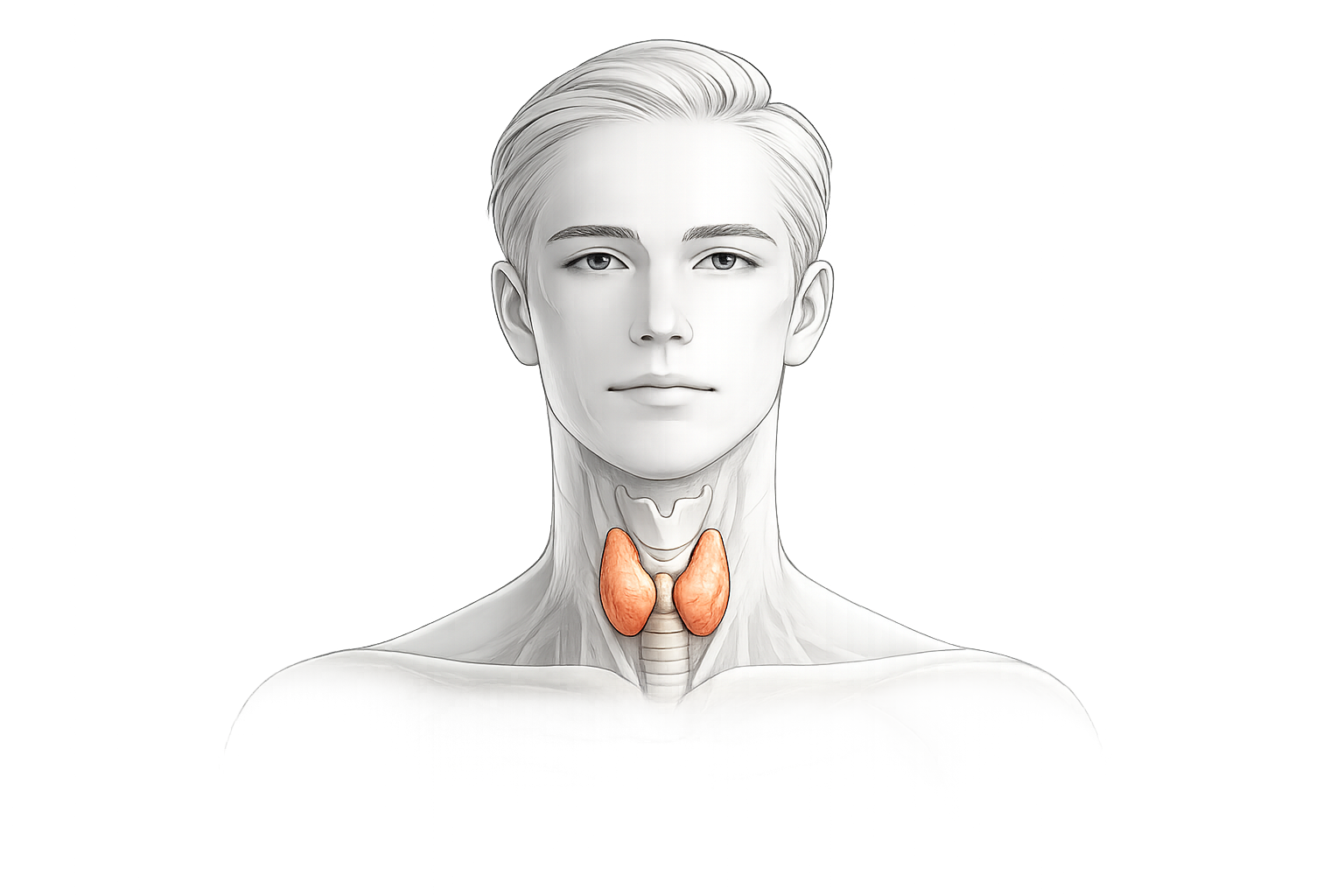
The thyroid at a glance
The thyroid is a small, butterfly-shaped gland at the front of the neck. It produces hormones that help regulate how the body uses energy and support many essential functions.
It sits in the lower front of the neck, in front of the windpipe.
It usually has two lobes joined by a small central bridge.
It produces hormones that influence energy use and many body functions.
Conditions that often do not need surgery
Not every thyroid problem is a nodule or enlargement that needs an operation. Viral or autoimmune inflammation can affect thyroid-hormone levels, and treatment is chosen after reviewing symptoms, blood tests, and the clinical examination.
It may cause neck pain and a temporary change in hormone release. Treatment is often medical, with follow-up blood tests.
The immune system may affect the gland, leading to underactivity or, at times, changes in activity that need treatment and monitoring.
Hormone production may be above or below normal. Treatment often relies on medication and regular follow-up, with surgery considered only in selected cases.
The purpose of assessment: to distinguish conditions that respond to medical treatment and follow-up from the smaller group that may benefit from surgery.
When might surgery be discussed?
Surgery is discussed when the details of a condition suggest that it may offer a meaningful benefit. The recommendation depends on the whole clinical picture—not the diagnosis name alone.
A large thyroid may cause difficulty swallowing or breathing, or create pressure and discomfort in the neck.
Some nodules may need surgical assessment because of their size, growth, ultrasound appearance, or related symptoms.
Surgery may be discussed when tests or biopsy results raise concern, or confirm a diagnosis for which surgery is appropriate.
Surgery can be one option in selected cases when other treatment routes do not suit the individual situation.
Assessment pathway
The purpose of the consultation is to understand the condition and choose the most suitable route—not to move automatically toward an operation.
Reviewing symptoms and medical history, followed by a neck examination.
Reading thyroid-function tests and other relevant results.
Reviewing the size of the gland and the features of any nodules.
Requested only when the condition needs more information.
Monitoring, medical treatment, or surgical assessment as appropriate.
The outcome is not the same for everyone: Viral or autoimmune inflammation and thyroid-activity disorders often respond to medical treatment with follow-up, while surgery is reserved for selected diagnoses.
Types of surgery
The extent of surgery depends on the diagnosis, test results, location of the problem, and treatment objective.
The surgeon determines the appropriate extent after discussing benefits, alternatives, and the considerations specific to the individual condition.
When surgery is selected
Exact arrangements differ between patients, so instructions for each stage are tailored to the condition and hospital.
Reviewing tests, medication, and the instructions needed before admission.
Completing assessment and preparation according to hospital procedures.
Removing the appropriate part of the gland under general anaesthesia.
Monitoring general condition, the wound, and any required tests.
Sending the removed tissue for laboratory examination when appropriate.
Reviewing results, medication, and the next follow-up plan.
Prepare for the consultation
Previous reports and images help create a clearer clinical picture and may avoid unnecessary repetition of some investigations.
Frequently asked questions
This information is general; medical assessment determines what applies to each individual condition.
No. Many nodules require assessment and monitoring only. The decision depends on the nodule’s size, ultrasound features, symptoms, biopsy findings when needed, and the patient’s overall condition.
Usually not. Many cases of viral or autoimmune inflammation, overactivity, or underactivity respond to medical treatment and follow-up. Surgery is discussed only when specific findings make it the more appropriate option.
A lobectomy removes one side of the thyroid, while a total thyroidectomy removes the entire gland. The appropriate extent depends on the diagnosis and investigation results.
Daily thyroid-hormone replacement is required after total thyroidectomy. After a lobectomy, the need for medication depends on the function of the remaining thyroid tissue and follow-up blood tests.
The voice nerves and the parathyroid glands that regulate calcium lie close to the thyroid. The surgeon therefore discusses these considerations before the operation and plans the appropriate follow-up afterward. The likelihood varies with the type of surgery and individual condition.
Bring blood tests, scans, ultrasound images, biopsy results, a medication list, and any relevant previous medical reports.
This page provides general information to help patients understand the assessment pathway. It does not diagnose a condition or determine treatment without a medical consultation.
Specialist consultation
You can book a consultation to review the available tests and discuss whether the condition needs monitoring, treatment, or surgical assessment.