
Pain or activity limitation
Discomfort during walking, work, exercise, coughing, or lifting may make planned repair appropriate.
General Surgery · Korba, Heliopolis
A hernia occurs when tissue pushes through a weak area in the abdominal wall. Some hernias remain mildly symptomatic for a period, while others cause increasing discomfort or require urgent treatment. Assessment clarifies the type, the risk, and the most suitable timing and method of repair.
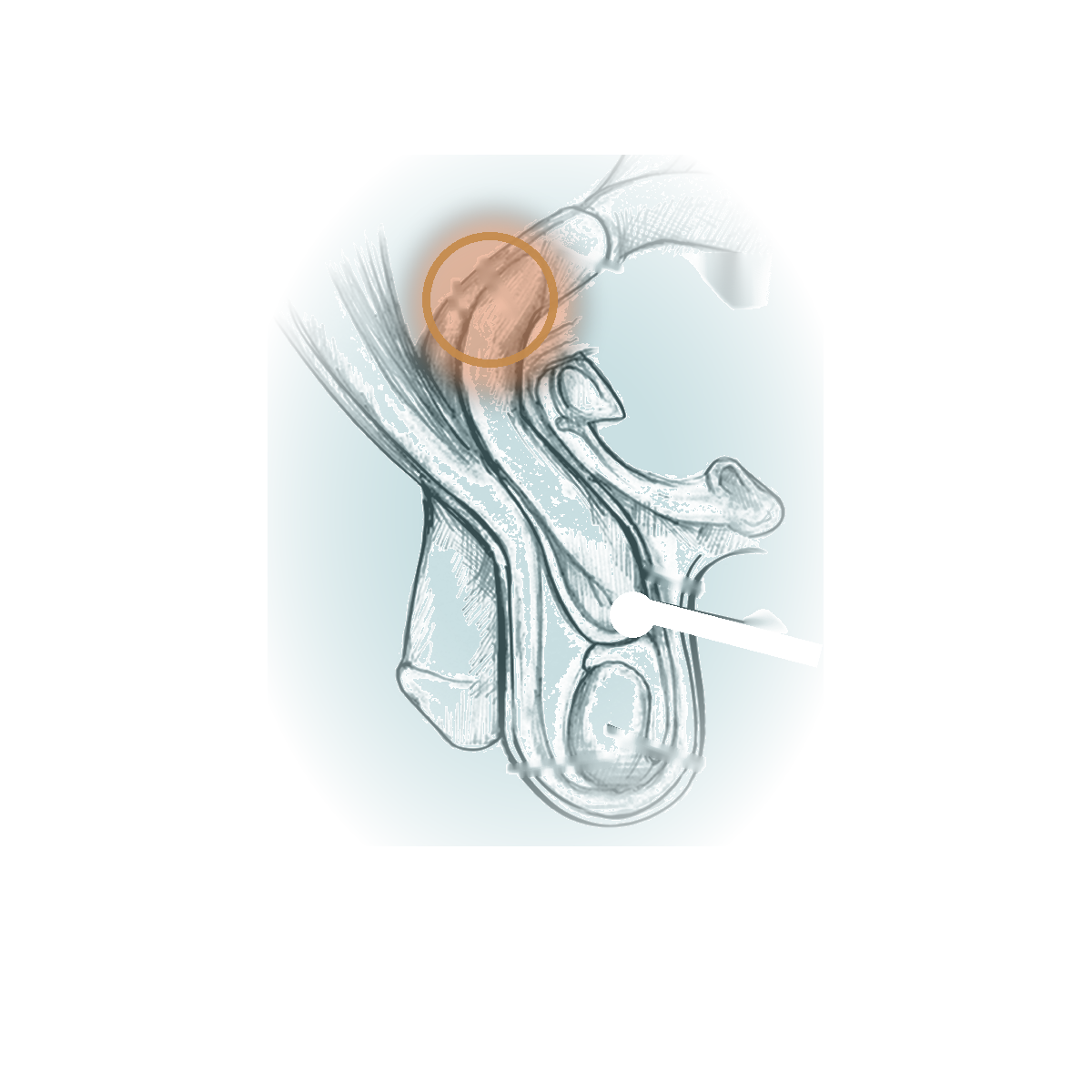 Hernia artwork adapted from the National Institute of Diabetes and Digestive and Kidney Diseases, National Institutes of Health.
Hernias at a glance
A hernia forms through a weakness or opening in the abdominal wall. Fat or part of the intestine can push through the defect, creating a swelling that may become more noticeable with standing, coughing, or straining.
Inguinal, femoral, umbilical, and incisional or ventral hernias are common abdominal-wall types.
A swelling, dragging sensation, pain, or discomfort during activity may occur.
A hernia can occasionally become trapped or lose its blood supply, which requires urgent care.
When is repair usually discussed?
Repair is considered when symptoms affect daily life, the hernia enlarges, the type carries a higher complication risk, or the clinical findings suggest that waiting is no longer appropriate.
Discomfort during walking, work, exercise, coughing, or lifting may make planned repair appropriate.
A hernia that becomes larger, remains out, or is increasingly difficult to push back should be reassessed.
Certain locations and recurrent or postoperative hernias may need earlier or more specialized repair planning.
Sudden severe pain, vomiting, abdominal swelling, skin colour change, or a tender irreducible lump can indicate obstruction or strangulation and needs emergency care.
Assessment pathway
Most hernias are diagnosed through history and examination. Imaging is added when the diagnosis, anatomy, or previous repair needs further clarification.
Understanding when the swelling appears, whether it reduces, what causes pain, and how it affects daily activity.
Examining the abdomen or groin while standing and lying down, sometimes during coughing or gentle straining.
Ultrasound, CT, or another scan may be used for unclear, recurrent, complex, or postoperative hernias.
Reviewing fitness for anaesthesia, medications, previous operations, and factors that may affect healing or recurrence.
Watchful waiting in selected cases, planned repair, or urgent hospital treatment depending on the findings.
The outcome is not the same for everyone: Selected men with an inguinal hernia causing few or no symptoms may be monitored after medical assessment. Many hernias eventually become more symptomatic, so follow-up and clear emergency advice remain important.
Repair approaches
Planning depends on the hernia type, location and size, symptoms, whether it is recurrent, previous operations, general health, and the surgeon’s assessment.
The surgeon determines the appropriate procedure after discussing benefits, alternatives, and the considerations specific to the individual condition.
When surgery is selected
Recovery plans differ according to the hernia, the repair technique, the patient’s work and activity, and whether the operation is planned or urgent.
Reviewing health, medications, previous surgery, and instructions for eating and drinking.
Confirming the hernia and completing anaesthetic and surgical preparation.
Returning the protruding tissue and closing or reinforcing the abdominal-wall defect.
Managing pain and encouraging safe movement after the operation.
Following instructions on dressings, bathing, lifting, driving, work, and exercise.
Reviewing healing, symptoms, and the gradual return to normal activity.
Prepare for the consultation
Previous reports and images help create a clearer clinical picture and may avoid unnecessary repetition of some investigations.
Frequently asked questions
This information is general; medical assessment determines what applies to each individual condition.
Adult abdominal-wall hernias generally do not close by themselves. Selected minimally symptomatic inguinal hernias may be monitored after assessment, but repair is the definitive treatment when surgery is indicated.
Seek emergency care for sudden severe pain, vomiting, abdominal swelling, a hard or very tender lump that will not go back in, or colour change over the swelling.
The choice depends on the hernia type, location and size, symptoms, whether it has been repaired before, previous operations, and general health. The surgeon selects the appropriate method after examination and discussion of the benefits and alternatives.
Mesh is commonly used in adult hernia repair because it reinforces the weak area, but it is not appropriate in every situation. The surgeon selects the material and technique after assessment.
The timing depends on the operation, the type of work, pain control, and healing. Individual instructions are provided after surgery rather than applying one fixed schedule to everyone.
This page provides general information to help patients understand the assessment pathway. It does not diagnose a condition or determine treatment without a medical consultation.
Specialist consultation
You can book a consultation to confirm the hernia type, review symptoms and previous operations, and discuss whether monitoring, planned repair, or urgent hospital care is appropriate.